
The Origins of an Early R.B.G.E. Outstation :
The Dreams of Sir Isaac Bayley Balfour
Glenbranter Glen, Glenbranter Forest, Argyll : An Historical Perspective
John M. Hammond
Introduction :
There is little doubt that the vast number of plant introductions that took place in the early-1900’s, raised from wild collected seeds sent back by Wilson, Forest, Ward and others, gradually overwhelmed the resources of the highly regarded institutions at the Royal Botanic Garden, Edinburgh; Royal Botanic Garden, Kew and the Botanical Garden at Glasnevin. Not only had these institutions to cope with raising and assessing the seed in their own facilities, they were faced with waves of correspondence being generated by the ‘key’ gentleman gardeners of the era who were trying to understand the taxonomic variations in the seed that they were raising from seed originating from the same collections.
When Sir Isaac Bayley Balfour (31 March, 1853-30 November, 1922) was appointed Regius Keeper in 1888, following the death of Alexander Dickson in late-1887, he decided to devote himself to the study of rhododendrons and Edinburgh became the principle clearing house for the genus. This in turn led to a different sense of direction and approach. It was also clear to Sir Isaac that many of the immense number of new rhododendrons being raised and distributed by Edinburgh were unsuitable for the cold winds emanating from Scotland’s East Coast, and for the smoky conditions of urban Edinburgh. Similar urban conditions also prevailed at R.B.G., Kew and at Glenevin in Ireland, so Sir Isaac set himself a personal challenge to find a more suitable site for growing-on the new introductions, as this was essential if the species were to be assessed with any certainty as to their performance in cultivation. In the early-1920’s both the Forestry Commission and the R.B.G.E. were both directly involved in the planting of rhododendron species in the glen itself at Glenbranter; nevertheless, the arrangements under which the plantings were carried out, the details of exactly what plant material was planted and their origin, who carried out the work, and what happened to the plantings after the R.B.G.E. changed its allegiance, as a result of a more accessible location on Benmore Estate becoming available, has remained something of a conundrum for the better part of a century.
In early-1991 the author discussed the origins of the rhododendron plantings in Glenbranter Glen with the late-Mervyn Kessell, President of the Scottish Rhododendron Society, as by this date the circumstances under which the plantings had taken place had become folk law and no documentation was available to verify what had become the legendary ‘Lost Garden of Argyll’. Mervyn contacted William MacDonald, at the Kilmun Office of the Forestry Commission, to try to establish the historical background of the plantings; however, William’s response dated 8th March, 1991 indicated the only document that could be found in the Forestry Commission archive was Sir John Stirling-Maxwell’s short article taken from the Rhododendron Society Notes. Mervyn also drew a blank in discussions with the staff at Benmore Botanic Garden, so the matter was reluctantly shelved. The curtains close and open again three years ago when the R.S.C.G. became interested in the area of the Glen that had been used for the trial plantings as a possible location for establishing a rhododendron species collection, and in due course reached agreement in principle with the Forestry Commission. Last October, with Dr. David Chamberlain and Peter Cox at the helm, the Group achieved one of its objectives when it carried out a detailed survey of the remaining rhododendron species plants in the Glen. The results were transferred to an Excel spreadsheet and then entered on the Group’s BG-base database at the R.G.B., Edinburgh. This provided an incentive for further research work in an attempt to unravel the origin of the plants in the Glen and to establish a more cohesive timeline for who was involved, and when. As there is no substantive history to refer to about Glenbranter and the trial plantings, this article includes previously unpublished details, including the impact of the 1930’s Depression and WWII, as these provide a wider perspective as to why Glenbranter’s past remains so elusive.
Working Relationships at R.B.G., Edinburgh :
The Head Gardener at the R.B.G., Edinburgh was Robert Lewis Harrow (1867-1954). He was born at Tenterden, Kent where he trained at in the gardens of Heronden Hall. He entered R.B.G., Kew in 1891 on the recommendation of Mr. I. Lynch of the Cambridge Botanic Garden and in the passage of time became sub-foreman of the Fernery Department. A couple of years later, Sir Isaac Bayley Balfour was, with the consent of the Treasury, preparing to rebuild the range of glasshouses at Edinburgh, and came to Kew in search of a young man to take charge of that department. Robert L. Harrow was chosen on the recommendation of Sir William Thistleton Dyer, the Regius Keeper. A few years later he was appointed Assistant Head Gardener at Edinburgh, and on the resignation of Mr. A.D. Richardson he was appointed Head Gardener. Harrow soon demonstrated his skill as a cultivator at the garden, he was both courteous and helpful to his many friends in horticulture and was held in high esteem by all who knew him; his post was eventually reclassified as Curator c.1927. Sir Isaac and Harrow worked well together, and they in turn were supported by Laurence Baxter Stewart (1877-1934) who had made a special study of plant propagation. Stewart was born at Kirremuir where his father was Head Gardener at Kenordy and came to the R.B.G. in 1901 where he became a wizard propagator and succeeded in raising many plants that had previously resisted all attempts to propagate them vegetatively. Both Harrow and Stewart carried out their work unostentatiously and, whilst their names occasionally walk across the pages of archive documents connected with rhododendron history, many readers are not acquainted with the part they played in both raising, distributing and helping classify rhododendrons for a period of thirty years at Edinburgh.
Sir Isaac, son of John Hutton Balfour an earlier Regius Keeper at Edinburgh, he came from a family with a horticultural background and had been a member of the Royal Scottish Arboricultural Society and active in its affairs as early as 1873. He was especially interested in the introduction of new conifers, which had similar problems to rhododendrons in that they did not perform well when planted in a smoky urban environment on the cold, windy East Coast; so any new site for trial plantings would ideally need to be large enough to accommodate both rhododendrons and conifers.
The Search for a Suitable Outstation Site :
The need to find a suitable site for trialling new conifer introductions was of immense interest to the Forestry Commission, which was set up in 1917 to manage timber resources following the severe depletion caused by the First World War. It was also recognised that it was important that both students and the public had the opportunity to look at and study the new introductions.
It was most fortunate that one of the key personalities with a major involvement in Scottish Forestry, and a vested interest in the Forestry Commission, was Sir John Stirling-Maxwell of Pollock House, Glasgow. Sir John was a highly regarded forester and had purchased the Corrour Estate adjacent to Rannock Moor with the intention of carrying out high elevation experimental plantings of various conifers. The outbreak of war in 1914 found Britain almost wholly dependent upon imported timber and, whilst timber is an essential munition of war, it is also the most bulky of cargoes in relation to its value. As the war progressed it became evident from the depletion of home-grown timber resources that the government would have to address its ‘Laissez-fare’ policy with regard to forestry. Sir John was appointed to the Ackland Committee, along with Lord Lovat, in 1916 to consider and report upon the best means of conserving and developing the woodland and forestry resources in the post-war years. In 1917 the Committee made a detailed report and the following year an ‘Interim Forestry Authority’ was set-up, which drafted a Forestry Bill that was introduced to Parliament and became law as the Forestry Act of 1919. On 29th November that year the Commissioners were appointed and Sir John became an active member of the Forestry Commission under its Chairman, Lord Lovat.
Sir John also had a passionate interest in rhododendrons and was developing a large rhododendron collection to the east of Pollock House. He subscribed to several of the plant collecting expeditions of the era, shared seeds and plants with F.R.S. Balfour at Dawyck and Lord Stair at Lochinch, and was in regular correspondence with Sir Isaac Bayley Balfour. Sir John acted as a facilitator at a meeting held at Pollock House in October, 1920 between all the parties with an interest in locating a suitable site for trialling both rhododendrons and conifers. In the presence of Lord Lovat, Mr. John D. Sutherland (Assistant Commissioner of Forestry for Scotland) and Sir Isaac Bayley Balfour, agreement in principle was reached in less than five minutes in regard to the way forward. All that remained was for a suitable tract of land to be identified. A further verbal agreement between the parties was based on a suggestion by Sir Isaac that the trial plantings should be accessible for inspection by both the public and students so they could gain an understanding of the performance of the new introductions. So, Sir Isaac had an objective of creating an ‘outstation’, even if the mechanics of actually achieving the aim were yet to be worked out.
The sea-lochs of Scotland’s West Coast, carved out by glacial action, run roughly northeast – southwest across Argyll, leaving fingers of land that are often difficult to access other than by boat. Thus land, with acceptable climatic conditions for trialling new introductions, is not often readily accessible. In the early-1920’s the acquisition of large tracts of land by the State, under the 1919 Forestry Act, provided an opportunity to realise Sir Isaac’s dreams. Amongst the lands acquired was the Glenbranter Estate, previously a shooting lodge and lands owned by Sir Henry Lauder, perhaps better known as the famous Scottish music hall star and farmer, Harry Lauder (4 August, 1870-26 February, 1950). Glenbranter lies at the north end of Loch Eck and is sheltered by hills that rise to over 2000ft above sea level. It has a maritime climate with heavy rainfall and little frost.
Historical Background of Glenbranter :
Glenbranter once marked the northern extremity of the Loch Eck Forest, an area originally called ‘Innasraugh’ – The sheltered valley of the fleece – and the grazing of sheep accords with use of the slopes of the valley prior to the major plantations of conifers that were made in the later 19th Century. These lands were occupied by the Lamont Family who purchased the Benmore Estate, the Forest of Benmore, Coir-an-T and the Lands of Cur for £13,000 at a public sale in 1849. The source of the River Cur lies in the moors high above St. Catherines, on Loch Fyne, and falls quickly down to the back of Strachur where it turns sharply south-east and looses momentum before entering Loch Eck. It would appear that the Glenbranter Estate created towards the end of the 19th Century during the period that Benmore Estate was passed between various members of the Lamont Family. Invernoaden House, better known as Glenbranter House, was built on the Glenbranter Estate at this time by the MacBrayne Family and thus relegated Invernoaden Farmhouse (Glenbranter Farmhouse), a late-18th or early-19th structure, to a secondary property. The MacBraynes of Glenbranter had the coat of arms of O’Brien and, whilst said to belong to Argyllshire, the ‘locals’ considered they were ‘modern’ arrivals in Cowal, possibly from Ireland. In the early-1900’s the estate was acquired by Fitzcharles Macdonald of Strachur who had been very successful businessman in Glasgow. MacDonald purchased Carfin Hall, near Motherwell in 1915 and then sought to dispose of the Glenbranter Estate.
Harry Lauder, and his wife Annie, had acquired Gerhallow House, Bullwood, Dunoon in 1908 as their main residence, changing the name to Laudervale in 1912. Lauder is thought to have leased the Glenbranter Estate as early as 1913-14 and then decided to purchase the estate with the future intention of gifting the property to his son John and his fiancé Mildred Thomson. The estate included Glenbranter House on the west side of the valley and lands around the head of Loch Eck, Glenbranter Farm with 14,000 acres of sheep pasture and forest, together with the lands of Glenshelish, Ballimore and Ballibeg. Glenbranter Farm was partially rebuilt and the interior was upgraded as a residence for his son John.
At the outset of the First World War John Lauder joined the 8th Argyll & Sutherland Highlanders and after training was sent to trenches in France. No sooner had the actual purchase been completed in October, 1916 than Captain John Lauder was killed in battle on December 28th, 1916, on the Somme, near Poizers. Harry & Annie were devastated and commissioned Henry Vallance to design, and Samuel Rose Cameron to sculpt, a large memorial that was erected in 1921 on a small wooded knoll, on the east side of the A815 near Glenbranter Farm, in John’s memory. Standing in an enclosure, surrounded by a cast iron railing, the site is thought to have been an Iron-age dun and commands a good view looking across Glenbranter and the upper reaches of Loch Eck.
The Acquisition of the Glenbranter Estate by the Forestry Commission :
Following John’s death the Lauders appear to have lost interest in the estate, and by 1916 there would have been problems finding staff for the house, whilst the cost of keeping the house in the appropriate style in the post-war years would have been a serious financial burden. In his own inimitable style, Harry Lauder noted in his autobiography :
All my life, right up to the time I became one myself, I had envied the landed gentleman with his life of freedom in the open air, his horses, his cattle, his dogs, his fruitful fields. Don’t, you believe a word of it. The picture is all wrong. I was lucky to get out of Glen Branter with my leather leggings and a haunch of preserved venison! Fortunately the Forestry Commission of the British Government came along with an offer soon after the war to take over the Glen for afforestation purposes. With bankruptcy staring me in the face, or at least, shall I say, peering its ugly head around the corner, I accepted the offer. I might be a good comedian, I told myself, but I had proved a rank failure as a prosperous country squire! Joking apart, however, we would have never left the Glen had John lived.
There is a reference that indicates the Lauder’s estate was put up for sale in 1920 and, according to a story in the New York Times, in December, 1921 the Forestry Commission offered Harry Lauder £22,000 for the estate, which he readily accepted and the sale was completed the following year. The Government retained the use of Glenbranter House, the lands around it, also the flat flood-plain surrounding the north end of Loch Eck; whilst the Forestry Commission took over the remainder of the property. In 1922 negotiations took place with the intention of turning Glenbranter House in to a hotel, but these were unsuccessful. The 14,000-acre Glenbranter property was considered ideal as trial site for new introductions and was the origin of the Forestry Commission’s enterprise in Cowal.
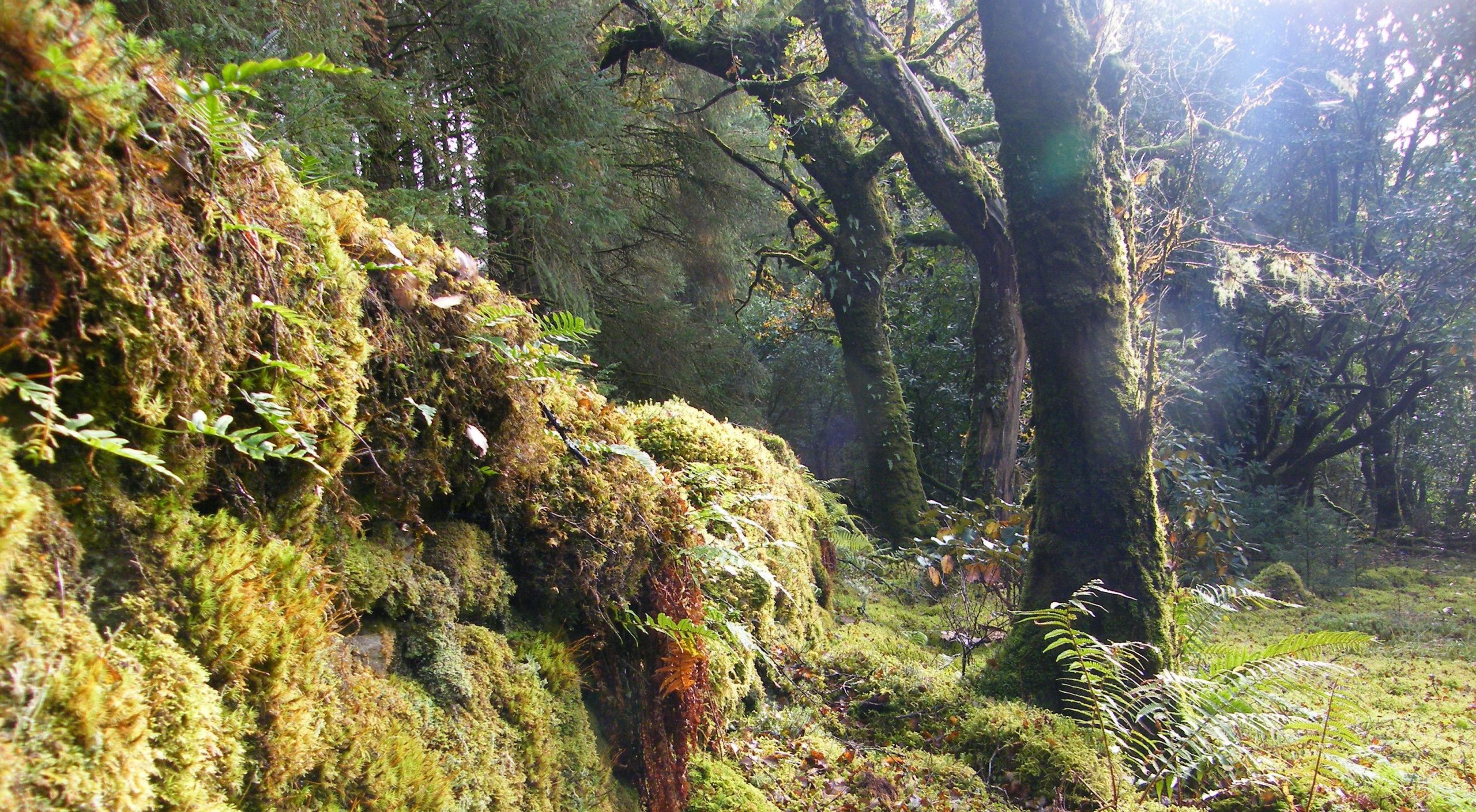
Glenbranter Glen is positioned where the Branter Water enters the glen at high-level and cascades in a series of waterfalls through the scenic gorge. It has a mica-schist formation sheltered by an oak and birch wood with a high canopy, however, in the early-1920’s the majority of the estate was bare moorland slopes. Unfortunately, just as the pieces of the jigsaw were coming together to enable the trial plantings to begin, Sir Isaac Bayley Balfour resigned in January, 1922 due to ill health and a couple of months later moved south to Courthill, near Haslemere, to a less rigorous climate. It was left to Sir Isaac’s successor, Professor William Wright Smith in liaison with John Sutherland of the Forestry Commission, to decide how a parcel of 50 acres that encompassed the main length of the Glen was to be planted with rhododendrons, spruce and fir. Sir Isaac and George Forrest had previously visited the site and agreed it was eminently suitable as a trial garden.
William Wright Smith had been seconded to the Timber Supply Department during the First World War as Officer in Charge of Labour for Scotland and had become very familiar with the problems relating to lack of resources and the other aspects that led to the setting-up of the Forestry Commission. Following the cessation of hostilities he served for a time on the Scottish Consultative Committee for Forestry and assisted the Forestry Commission in facilitating the setting-up of a forest nursery on a site adjacent to the Botanic Garden. The area concerned was between the then iron railings skirting the north side of the Botanic Garden and Inverleith Place, which in the early-1920’s was a field used for the grazing of cattle; here experimental plots were laid out and considerable scientific work was carried out. However, Wright Smith needed to take time out to finalise the arrangements for the trial plantings at Glenbranter, which involved negotiations to convince the Department of Works that the cost involved would not be too heavy such that there would be no merit in taking the project forward. His estimate of costs of £200 .00 per year was based on most of the physical work to secure the site, and the provision of roads and bridges would be undertaken by the Forestry Commission. Operations for many years would be confined to the establishment of young plants of many species in the planting season and to clear away occasional scrub and bracken which might interfere with their development. Nothing would be expended on the purchase of plants. The special area would be under the superintendence of the Regius Keeper and the general control of the officers of the Forestry Commission. Furthermore, there would be no intention of developing the Glen as formal Arboretum or Experimental Garden. The plantings would all be allowed to develop naturally in the sites chosen for their special requirements. The Department of Works fully supported Smith’s way of approach, the Treasury granted the necessary funds, a start was made in the planting of the great rhododendron garden that Balfour had dreamed of, and which all agreed should be named the Balfour Memorial Garden.
Sadly, Sir Isaac Bayley Balfour passed away on 30th November, 1922. And, Sir John Stirling-Maxwell noted :
The only regret – a regret that no one will feel more deeply that his colleague and successor – is that Sir Isaac has not lived to see this thing through. It will none the less owe everything to him. His traditions will no doubt be carried on by Professor Smith and Mr. Harrow. The forest officers trained in Sir Isaac’s class will grudge no trouble in a venture he had so much at heart.
Ironically, the first shipment of trees was despatched the following day 1st December, 1922; as recorded in the R.B.G. ‘Dispatch Books’ which detail plants that were sent out from Edinburgh to various gardens and nurseries around the world.
Records of Ornamental Shrubs and Trees Planted in Glenbranter Glen :
It would appear that the use of Glenbranter as a trial site for planting new introductions was based on a ‘Gentleman’s Agreement’, as no trace can be found of any correspondence or formal agreement in the R.B.G. archives relating to the location. In fact, no records exist under the name of Glenbranter, or any of the surnames of the Forestry Commission staff involved. So, for administrative purposes the trial site remained under the control of the Forestry Commission, and the Dispatch Books record a total of fourteen shipments of plants and trees, those in 1922/23 were sent to Mr. R.W. Patterson, Forestry Commission, Glenbranter, Strachur, via Kilmun Pier, whilst the 1924 shipments were addressed to Mr. R. Shaw at the same address. Interestingly, the Rhododendrons batches were shipped by passenger train, whilst the other shrubs and trees were sent via goods train!
Outline details of the fourteen shipments are as follows :
- 1st December, 1922 : Large batch of trees.
- 29th January, 1923 : 15 rhododendron species.
- 12th February, 1923 : 12 rhododendron species.
- 6th March, 1923 : Large batch of trees.
- 6th March, 1923 : 17 rhododendron species.
- 8th March, 1923 : Small batch of trees.
- 9th April, 1923 : 15 rhododendron species + 2 rhododendron hybrids + a large batch of trees.
- 25th April, 1923 : 4 azalea species + 80 rhododendron species + 1 rhododendron hybrid.
- 17th July, 1923 : 80 Eucalyptus species.
- 18th April, 1924 : 8 species.
- 30th April, 1924 : 1 azalea species + 12 rhododendron species + 1 rhododendron hybrid + a very large batch of shrubs
- and trees.
- August, 1924 : 52 rhododendron species + 3 rhododendron hybrids.
- 25th August, 1924 : 92 rhododendron species. ( 1st Lot )
- 25th August, 1924 : Large batch of shrubs and trees. ( 2nd Lot )
Many of the rhododendrons were dispatched with only the collector’s number recorded, which suggests these had yet to be evaluated and classified in taxonomic terms. At a later date H.H. Davidian made some notation against a few of the collector’s numbers, although the notes are undated and question marks have been placed against some entries. Copies of the dispatch details have been passed to Dr. David Chamberlain for more detailed analysis, so this is very much a ‘work in progress’ and it is hoped to have a more informative listing available at a later date.
No records have been found that identify the planting locations of the rhododendrons, or that outline how the new introductions were cared for after the last, and largest, batch was shipped from Edinburgh on 25th August, 1924. Whilst the R.B.G. staff must have monitored the performance of the plants, it has not been possible to locate any reports in the archives at Edinburgh. Equally, no records have been found that explains how the new tree introductions performed, although there is a note suggesting that Wright Smith’s advice was sought as to how the initial 4500 acres of conifer plantations at Glenbranter should be laid-out, the suggested rate of planting being 400 acres per year.
It’s Greener on the Other Side of the Hill :
Little more, if anything, is known about the trial site at Glenbranter until after May, 1925 when Harry George Younger’s decision to gift his Benmore Estate to the nation first became known. And, by this date, according to F.R.S. Balfour of Dawyck, upwards of 1400 acres had already been planted by the Forestry Commision at Glenbranter. The history of the 11,000 acre Benmore Estate, and the subsequent acquisition of the gardens surrounding the House by the R.B.G., Edinburgh as an outstation, is documented elsewhere and, for the purposes of continuity, this article will only cover the aspects relating to Glenbranter.
In the course of the discussions, in connection with the arrangements for handing over the Estate, it became clear that H.G. Younger was particularly interested in the establishment of the Balfour Memorial Garden and he suggested that a site for it more suitable than Glenbranter might be found on Benmore Estate. Smith quickly realised that the Benmore site had a number of advantages over Glenbranter, not least of which was that Benmore was already well developed and worthy of a visit by the public, whereas it was not expected that Glenbranter would be sufficiently developed for another fifteen years to be worth visiting by anyone other than a rhododendron enthusiast. Smith suggested that the Balfour Memorial Garden be sited in the Benmore policies where the avenue of Sequoiadendron giganteum runs across the valley floor connecting the fast-flowing River Eachaig with the edge of the wild moorland slopes; furthermore, the outstation would operate under the same joint jurisdiction as at Glenbranter. All parties were agreeable.
After the final shipment to Glenbranter on 25th August, 1924 the name ‘Younger’ appears in the ‘Dispatch Books’ on plant material being despatched to the Benmore area, so by 1925 the attention of the Regius Keeper and staff must have switched to Benmore. At this stage it is not known whether ‘Younger’ in the Dispatch Books refers to the gardens at Benmore House, or the gardens at Eckford House where the Younger Family moved to when they vacated Benmore House. Further research is currently ongoing with the intent of establishing the chronological sequence of events that took place with the transfer of the Benmore Estate to the Nation, as there are a number of conflicting dates given in previous accounts. However, records indicate the transfer formalities took almost four years to complete before H.G. Younger completely handed over his estate to the nation in December, 1928. The greater part of the estate came under the control of the Forestry Commission, with Younger’s former residence scheduled to become a training school for young foresters, whilst the policies of some 90 acres surrounding the House came under the control of the Regius Keeper of the R.B.G., acting on behalf of the Department of Works. Thus, in early-1929 William Wright Smith was able to commence the physical work of establishing an outstation at Benmore, under the aegis of the Younger Botanic Garden, rather than the Balfour Memorial Garden, and the Glenbranter site appears to have been abandoned at this date and left to go quietly to sleep. Sir Robert Lorimer was entrusted, by the Isaac Bayley Balfour Memorial Committee, to design the structure for a rest-house to be located on the Benmore Estate on a rocky eminence overlooking Puck’s Glen, but somehow this has never seemed an entirely appropriate memorial.
Glenbranter : The Depression Years, World War II and its Aftermath :
In early-1933 there were over 380,000 un-employed persons on the registers in Scotland and on the 17th March, 1933 the Minister of Labour opened an Instructional Centre at Glenbranter for unemployed men. This was one of 16 residential centres at which men, specially selected from depressed areas where prolonged and heavy unemployment was an ongoing problem, were given a three-month re-conditioning course to fit them for labouring work. Refusal to attend resulted in stoppage of unemployment benefits, so those selected had little choice. To say the least, these camps were controversial, as many were located well away from any towns or amenities that could be a distraction to the work ethic, and Glenbranter was no exception being 16 miles from Dunoon. The other camps in Scotland or in the Borders, were Glenfinart (Ardentinny) opened 20th February, 1936, Lampits Farm (Carstairs Junction), Kielder (Northumberland) and Kershopefoot (Newcastleton), and many of those sent to the camps came from the mining and industrial locations in South Western Scotland. Located on the flatland in front of Glenbranter House the conditions at the Camp were grim for its total capacity of 200 men; i.e., wooden or corrugated-iron huts that offered little protection in the winter, no electricity, poor sanitary arrangements, and heavy labouring on road work, or quarry work, or felling trees, with little skill-based training. On arrival the men were provided with a ‘uniform’ of brown corduroy trousers, hobnail boots and a shirt, so they could be recognised outside the camp. The men were free to resign from the training and would be provided with a warrant to travel home, but they would loose their benefits, so there were few resignations. Little wonder this generated an ongoing sequence of complaints from the men, and massed protests at the Camp eventually reached the national newspapers. Also under the control of Glenbranter was Ballemeanoch Summer Camp, five miles south of Inveraray, which opened in 1935. By 1939, with the likelihood of war on the horizon, the workforce at the camps were utilised for constructing evacuee camps, prior to being disbanded with the onset of hostilities.
Early in WWII Glenbranter Camp was used to house internees waiting to be assessed, many of them being ex-members of the communist Czech-Slovak Army who had fled from their home country, when the German’s moved in, and came to Britain by way of France. Some of these discontented Czech soldiers, who had been detained under Article 12(5a) of the Aliens Order, had already caused disturbances in a military camp at Cholmondley, in Cheshire, and it was decided in mid-1940 to segregate those responsible. Of these, those who had refused to volunteer for service under the Czech military force in Britain, or were unacceptable for medical or other reasons, were sent Glenbranter Camp for assessment as to their background and any possible allegiance with the enemy. By 1942 there were 17 accommodation huts located to the south of the avenue of trees that led to Glenbranter House and 14 smaller huts to the north, and in that year Glenbranter became a Prisoner of War camp for Italian PoWs captured in North Africa, known as Camp 6. It is thought that the Italian P.O.W.’s were transferred later that year to Camp 60 on Orkney to overcome the shortage of labour on the continuing construction of the Churchill Barriers to block access to Scarpa Flow. On 14th December, 1942 the site was commissioned as H.M.S. Pasco, a training base used by Combined Operations and was a landing craft signals school that operated in conjunction with the camp at Glenfinart House on Loch Long (commissioned as H.M.S. Armadillo), for training RN Beach Commandos to control, from an enemy beach, the flow of incoming and outgoing landing craft. Glenbranter was not de-commissioned until October 1945.
What part, if any, Glenbranter Glen played in the activities during the 1930’s & 40’s when the camp was operational is unknown. In the face of continuing concerns and requests for clarifications in the post-war era in connection with the establishment and operation of the Instructional Camps, which some protesters suggested were run like concentration camps, the Government for political reasons, refused to admit that the Camps had ever existed. And, various researchers, including the University of Stirling, have noted that all the records and reports have ‘disappeared’, including those for Glenbranter Camp. It may be that the records held by other government bodies associated in some way with the Camp locations, were also ordered to be destroyed and perhaps this is why no records can be traced in the archives. After the war the Glenbranter Camp site was gradually cleared and the lands were assimilated into those operated under the Forestry Commission, who began to encourage public access to the lands. The north side of the tree lined avenue was built over with Forestry Commission housing, whilst the south side has been completely cleared. Glenbranter House was demolished in 1956 and the site became the Lauder Car Park where three short walking trails begin, the Waterfalls Walk, the Broadleaves Walk and the Conifer Walk; collectively known as the Lauder Walks. The Waterfalls Walk, which in recent years has been upgraded by the Forestry Commission staff with re-laid pathways, new steps and handrails, takes the visitor on a circular route around the scenic waterfalls and through the historic rhododendron plantings.
In Conclusion :
It is eighty-five years since William Wright Smith decided to concentrate on developing an outstation at Benmore and, in doing so, the R.B.G.E. left in its wake a collection of gradually maturing rhododendrons at Glenbranter to fend for themselves in the trial garden of Sir Isaac Bayley Balfour’s dreams. And, each Spring the mature rhododendrons light-up the Glen, where the very attractive R.decorum has self-seeded itself all over the place, as if in memory of Sir Isaac whose determination led to the creation of this most unusual garden that is readily accessible to both public and students, as was his wish. Records indicate that in the 1920’s and 30’s there was no shortage of plants raised from wild-collected seed in the nurseries of the R.B.G., Edinburgh, so Robert L. Harrow and Laurence B. Stewart were delegated the task of dispatching thousands of plants to the Younger Botanic Garden. Perhaps it was more practical for Edinburgh to ship batches of plants of known origin and to start from scratch laying-out Benmore, rather than get involved with the politics and tribulations of lifting and transhipping specimen plants from the Forestry Commission’s site at Glenbranter. Either way, we have now solved half of the riddle, as we have verified the details of all the plants that were shipped from Edinburgh for planting in the Glen; however, the second part of the conundrum may be more difficult to solve, as no details have been located to explain what happened to the large consignments that were planted in the Glen.
References :
- Dispatch Books. December, 1922 – June, 1926. Royal Botanic Garden, Edinburgh.
- Kilpatrick, C.S. 2008. The Establishment of the Forestry Commission, Northern Island Forestry Service : A History. 2008.
- Histories : Benmore. Lamont Family History, D.N.A. Study, 2010.
- Vallance, Jim. Undated. Harry Lauder’s Homes 1870 – 1950. Unpublished document.
- Scottish War Memorials Project. 2006. Scottish Military Research Group.
- Stirling-Maxwell, John. January, 1923. Glenbranter. The Rhododendron Society Notes 1922, East Bergholt, Suffolk.
- Sutherland, John D. 1923. Sir Isaac Bayley Balfour Memorial. British Medical Journal, November 3, 1923.
- Balfour, F.R.S. 1925. Benmore, Argyll. The Rhododendron Society Notes 1925, East Bergholt, Suffolk.
- Mr. Robert L. Harrow, V.M.H. Gardener’s Chronicle. 15 January, 1927.
- Prominent Edinburgh Horticulturalist (Mr. R.L. Harrow). Scotsman. 22 September, 1931.
- Laurence B. Stewart. Gardener’s Chronicle. 3 February, 1934 & 10 February, 1934.
- Benmore and the Younger Family. 2005. Annual Business Meeting Programme. Royal Scottish Forestry Society.
- Lauder, Harry. 1927. Roamin in the Gloamin. Hutchinson & Co. Ltd., London.
- Fletcher, Harold R., & Brown, William H. 1970. The Royal Botanic Garden Edinburgh 1670 – 1970. H.M.S.O., Edinburgh.
- The Historical Development of Pollok Estate. 1987. Royal Scottish Forestry Society. Perth.
- Hansard. March, 1934 – October, 1940. Training Centres; Training Camp, Glenbranter. Commons Sittings & Lords Sittings.
- Glenbranter House History. Secret Scotland. 10 October, 2009.
- Maspero, Ida. Argyll’s Lost Garden. The Botanics. R.B.G., Edinburgh. Winter, 2006.
Acknowledgements :
Any article dealing with a complex sequence of events that have their origins a century ago, and for which scant documentation exists, relies on the support provided by many other sources. I would particularly like to thank Leonie Patterson, Library Archivist at the R.B.G., Edinburgh who has been most helpful and has provided details from the institution’s records; David A.H. Younger of Eckford who continues to be a fount of knowledge relating to his family and all things relating to Benmore; and Ian W.J. Sinclair whose knowledge of Benmore and Glenbranter, from his days as Asst. Curator at the Younger Botanic Garden, continues to support the wider endeavours of the R.S.C.G.