Alan John Clark: An Appreciation
John M. Hammond
Contents
- 1. Alan Clark: An Appreciation
- 2. Alan Clark’s Plant Hunting Expeditions & Collection Numbers
Alan John Clark, the internationally highly regarded garden curator, nurseryman, landscaper, rebel, intrepid modern-day plant hunter and propagator extraordinaire, whose only purpose for being was to live and breathe rhododendrons, passed away at home at Dalston in Cumbria, England on 22nd September 2023 after a long illness. Alan never talked about his family and the many facets of his earlier life, so his many friends will not be aware of what a fascinating person he was.
Alan, eldest of four siblings, Peter, Gwenda and Karen, was born in the difficult times shortly after the end of WWII on 13th November 1945 at Exeter in Devon, where they were living with their maternal grandparents, who Alan developed a close bond with. His father was still stationed at RAF Lincolnshire where he was flying missions to repatriate troops stranded in Europe after the war, then on being discharged from the RAF he returned to Aberystwyth University in Wales to continue his studies in the Department of Agriculture. Subsequently, Alan’s father got a job as Senior Scientific Officer at the Animal Physiology Research Centre at Brabraham in Cambridgeshire, so the family moved to the area.
On leaving Secondary School, Alan and Pete attended Sawston Village College in the early 1960s, but Alan decided he was not interested in taking further education courses and took an apprenticeship with Pye Instruments in the University City of Cambridge, manufacturers of scientific instruments, to learn a trade and earn some money. This was the early 1960s and both Alan and Pete grew their hair long, being influenced by the Beatles, Rolling Stones, and Bob Dylan. Alan took up playing the bass guitar, left home in 1964 aged 18, and moved into a house in Cambridge with members of a rock band named ‘Jokers Wild’, remembered for launching the career of David Gilmour of the ‘Pink Floyd’ group.
Around this time, Alan won a scholarship to study horses in the Camargue, which reinforced his love of horses and the great outdoors, so he decided that a career in electronic instrument making was not for him. He got a job as Sales Representative in southwest England with Paul & White Ltd, an animal feed company, reinventing himself as a smart, sports jacket wearing, pipe smoker who dashed around country lanes in Devon and Cornwall in a Morris Minor Traveller visiting farmers. During his farm visits he was recommended to join the ‘Young Farmers Club’ (YFC) and was later chosen to organise and lead a YFC delegation on a Tour of India, where the group had an audience with Indira Ghandi and Alan became acquainted with rhododendrons in the wild. This probably kick-started his love of organising and leading his many subsequent plant-hunting expeditions to the various mountainous regions of Asia.
Alan developed a love for gardening and, being fed-up with driving around the congested narrow country lanes of Devon and Cornwall with their high hedgerows obscuring the view, particularly in the busy tourist season, he decided to set-up Wall Cottage Nursery at his home near St. Austell. In 1978 a friend visiting the nursery told him it was time he got some ‘real’ plants and invited Alan to visit his gardens. It was Alan’s lucky day, as the visitor was none other than Major Walter Magor of Lamellen Estate in St. Tudy Parish, near Wadebridge, and Editor of the RHS R.C.& M. Group ‘Yearbook’. Alan later recalled:
“When I visited [Lamellen] the following spring I was just blown over by it all and thought I must learn how to propagate these [rhododendrons]. He encouraged me and arranged with other garden owners for me to collect cuttings. Back in those days nurserymen kept their secrets very close to their chest, so it was very difficult [to obtain cutting material].”
Walter Magor’s father, E.J.P. Magor of Lamellen, was renowned for providing help and support to pioneer rhododendron nurserymen on both sides of the Atlantic, and Walter carried on the family tradition (see: ‘Mr. Magor and the North American Triangle: An Historical Perspective’,JAR, Vol. 58, No. 3, p. 135). So, as well as providing Alan with his first rhododendron cutting material from both species and hybrids of known origin, Walter was an expert propagator and would have given Alan key advice regarding raising plants from seed and cuttings. This instigated Alan’s lifetime passion for rhododendrons, and he quickly became an expert propagator whilst raising plants for sale at his nursery. He regularly visited rhododendron gardens each spring to widen his knowledge and he maintained in contact with the Magor Family across the years.
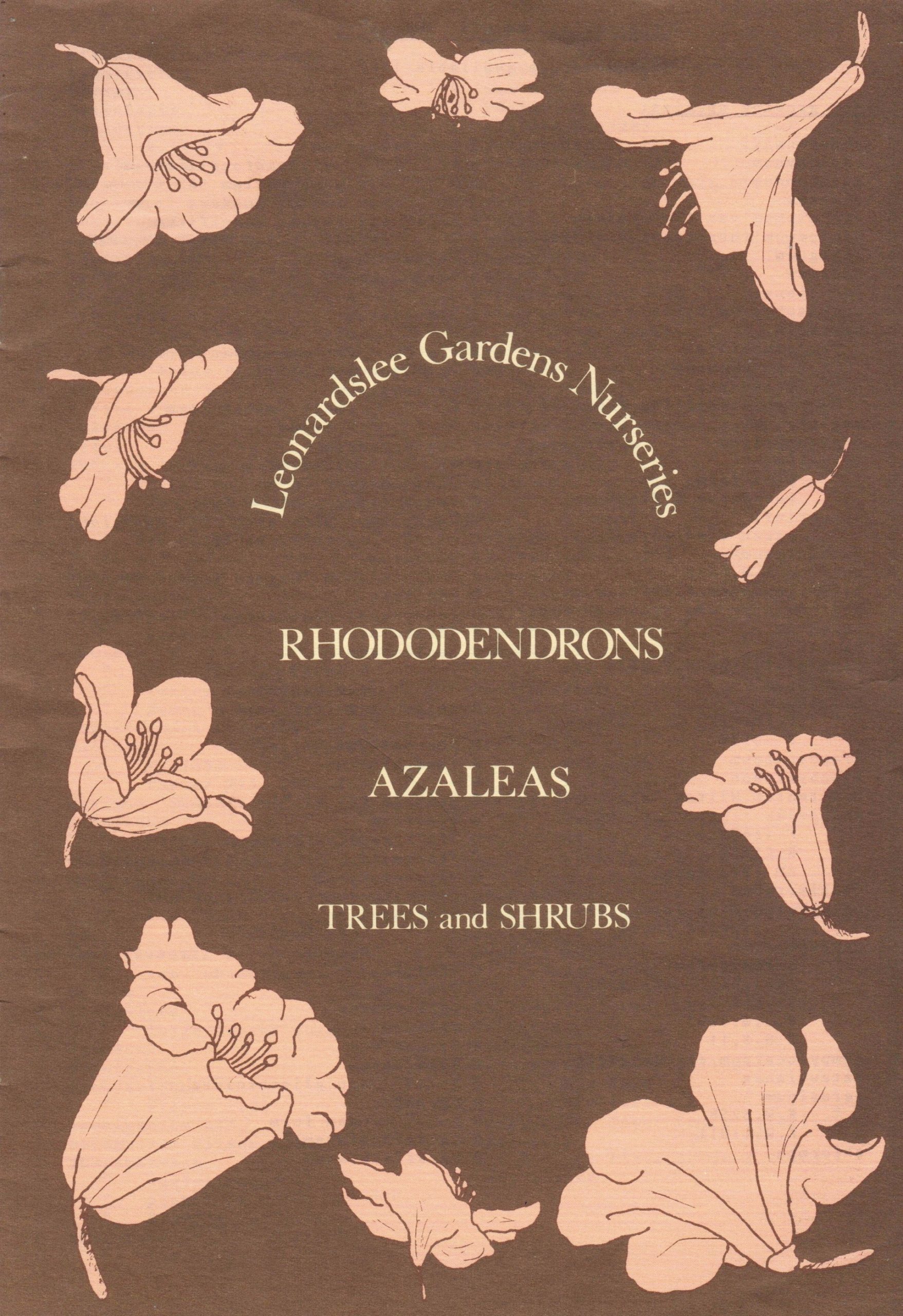
Around 1984 the Loder Family of Lower Beeding, near Horsham in West Sussex, were seeking a Curator for the world famous Leonardslee Gardens, an 82-acre woodland garden containing a major rhododendron collection, and offered the opportunity to Alan, which he accepted, as long as he could continue operating his nursery on the property. Alan then married his wife, Sue, and they had a daughter, Emma, and lived on the grounds of the estate. Sir Edmund Loder began laying out Leonardslee Gardens in 1889 and is renowned for making the highly regarded R. ‘Loderi’ hybrids, and the gardens contained hundreds of mature specimens from his wider hybridising programme; however, various overgrown areas of the garden were gradually being partially cleared, restored and replanted. Alan took forward the restoration work and in a relatively few years he had established ‘Leonardslee Gardens Nurseries’, for which his 1986 catalogue contains around 720 varieties of rhododendrons and azaleas. In October 1990 he went on his first plant hunting expedition to Bhutan with Keith Rushforth (leading), Ian Sinclair, Tom Hudson, Anne Chambers, Stephen Fox and Patrick Forde.
In 1992 he arranged to lead his first plant hunting expedition to N.W. Vietnam, but it was a close-run thing, as agreement to explore the Fansipan Range in the extreme northwest of Vietnam only came through five weeks prior to the departure date. A separate list is appended providing details of the seventeen plant hunting expeditions he organised across the years.
In 1992 Patrick Gordon-Duff-Pennington, hill farmer, rebel, negotiator, gardener, poet and raconteur, who ran the Muncaster Castle Estate with extensive rhododendron gardens on the West Cumbrian Coast, head-hunted Alan to initially talk about rhododendrons, demonstrate their propagation and lead tours of the 77-acre rhododendron gardens at a two-day ‘Rhododendrons For All’ special event to be held on Saturday 25th and Sunday 26th April 1992. The event was well attended, however, Patrick had other objectives in mind. That the gardens at Muncaster had survived through some difficult times since the death of Sir John Ramsden in 1958, who originally laid out the gardens, was largely due to Patrick. He offered Alan the opportunity to become Curator at Muncaster, with accommodation in a cottage in the grounds and the use of the extensive Garden Centre buildings and glasshouses for establishing a nursery. Muncaster Castle, together with its many buildings and gardens had only received minimal maintenance and upkeep for many years and behind the scenes a major scheme was being finalised to restore the gardens and its extensive buildings as part of project being taken forward and jointly funded by English Heritage and the Lottery Commission. Alan accepted the offer, and the family arrived at Muncaster a short while later. Alan was conversant with the plant material at Muncaster and lost no time in forging ahead with the restoration work. I went up to see Alan and Patrick a few weeks later and was amazed how much tree surgery and restoration work had been taken forward in a relatively short time.
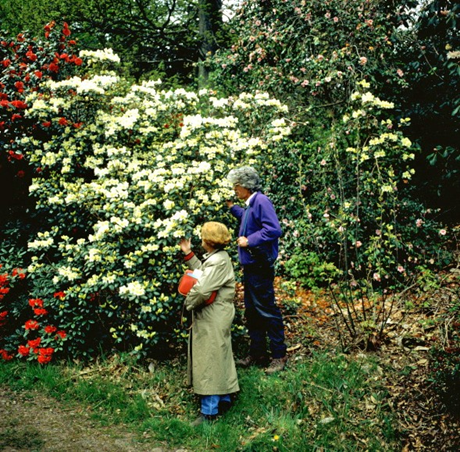
That this unlikely duo, from totally different worlds, would not always ‘play to the same tune’ had an air of inevitability about it. On the one hand there was Patrick, who had resigned himself to the fact that major tree-surgery and replanting was the only long-term option to restore the gardens; had wondered how this could be achieved in a practical way without seriously damaging the existing plants and thus losing the garden’s appeal. He also had concerns with the problems of funding and taking forward each stage of the work, but despite all of this, he had the courage and tenacity to support the restoration project. On the other hand, when Alan came to Muncaster in 1992 it was in many ways a happy co-incidence, as previously having been the Curator of Leonardslee Gardens, he was faced with re-invigorating many of the plants that had originally been raised at Leonardslee prior to the First World War. Sir John Ramsden had acquired two batches totalling around two hundred very large specimen hybrids from Sir Edmund Loder that were surplus to requirements from his hybridising programme and included many original R. ‘Loderi’ crosses. With the assistance of the highly regarded rhododendron author John Guilt Millais, who acted as Sir Edmund’s agent, Sir John Ramsden was able to purchase the plants as he owned several estates at the time. Alan knew from long experience exactly what needed to be done and how to do it, he had the uncanny capacity to be able to visualise what the finished product would look like and had a tremendous appetite for work, such that he couldn’t wait to get started and would have happily taken on all stages of the planned work simultaneously. However, as the work was ‘linked’ with an overall £ 4.8M project, 50% funded by the Millennium Commission with further grant aid from English Heritage and the European Development Fund for structural and infrastructure renovations, the restoration of the gardens needed to be carried out in stages. So it was that these two mavericks, each with a mind of their own, were poles apart in communication terms; but against all the odds and the financial strictures the work went ahead in a very practical way.
Throughout the gardens over-mature beeches and other trees were felled in manner that took account of the ornamental plants in their vicinity, large top-heavy ornamental plants were cut-back, large overgrown flat areas and banks were cleared and prepared for replanting, new beds were created, around ten thousand species and hybrid rhododendrons were propagated, as were numerous companion plants and trees, and these were planted out in accordance with the plans. Together at Muncaster these two rebels had successfully brought about a major programme of clearance, replanting and regeneration. In 1998 Alan summarised the overall project:
“In 1999 we will dedicate one of the garden walks to Frank Kingdon Ward; this beautiful 1 km trail will take our visitors past some of his outstanding and now sadly rare introductions. These include Rhododendron macabeanum, montroseanum in both pink and white forms, kwayii, elliotii, genesterianum, manipurense, and lanigerum, johnstoneanum, hirtipes, cinnabarinum ssp. xanthocodon and beanianum in both red and pink forms from Kingdon Ward’s seed are also growing in other parts of the garden.
In a large area of the garden known as Lily Bank Wood, a collection of rhododendron hybrids raised in the United Kingdom is being planted. Our aim is to show visitors how, over the last one hundred and fifty years, rhododendron hybrids have progressed from being mainly treelike in habit to the much-loved dwarfs, only possible following the introduction of species from South-west China.
Another exciting project is the Sino-Himalayan Walk. On steep hillsides reminiscent of the approach to the Dorking La in Tibet, we will plant a wide range of plants grown from seed collected by myself and others over the past eight years. The initial planting will consist of around four thousand plants to include sixty species of rhododendrons, Acer, Sorbus, Abies, Pinus and numerous shrubs and perennial species to form the understory. We will have space to plant large quantities of some species replicating nature, the towering Douglas Firs replacing the Himalayan Silver Firs, and from the higher points views of the fells will give an impression of the natural home of these plants.”
Whilst at Muncaster, in around 1994, Alan wrote the notes to accompany the intricate botanical painting of Rhododendron fulgens, a not often seen species he first came across in 1979 at Lamellen Garden in Cornwall and had been collected by J. D. Hooker in 1849-50, which graces page 27 of Marianna Kneller’s beautiful volume, ‘The Book of the Rhododendron’, published in 1995. Alan rarely picked up the pen to write, his hands were for creating plants and gardens for others to enjoy.
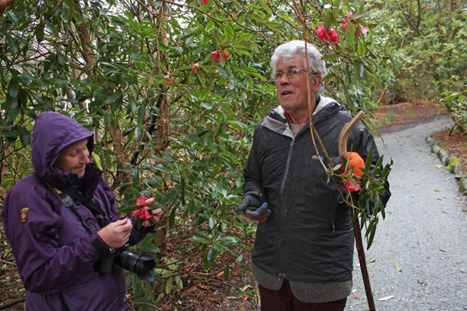
Not only did Alan carry out clearance, replanting and restoration work in the above areas, he also carried out work wherever there were rhododendron plantings on the Muncaster Estate, including along the Main Drive, along the half-mile Georgian Terrace running eastwards from the Castle and in Church Wood. But as the main project to restore Muncaster’s buildings and gardens was reaching the stage where further construction work was still required to finalise the scheme, so financial problems arose. Alan began to have difficulties in receiving payment for the materials and plants he had supplied in accordance with the plans he had worked to, as the main project management wanted to use the remaining grant-aid monies elsewhere, so there was an impasse. In the midst of this, Alan’s family broke-up and Sue and the children moved back to live down south, as Alan couldn’t bear to be parted from his plants, which was his livelihood. With seemingly little hope of the financial impasse being resolved, Alan left Muncaster in 2000 taking with him a large portion of the sale plants and a multitude of trays of young plants from the Garden Centre. According to his family, Alan always had the capacity to put difficulties behind him and move on. In a remarkably short time, he set up
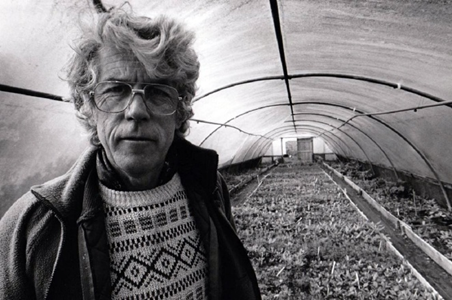
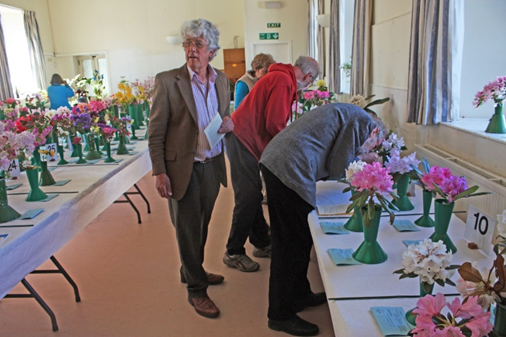
Penton Mill Rhododendron Nursery on virgin land, near Langholm on the Border between England and Scotland. Alan spent his evenings propagating hundreds and hundreds of plants from rhododendron species seed from his plant hunting expeditions, together with raising large numbers of plants from grafts and cuttings. He then produced a very professional nursery sale catalogue with a front cover in colour depicting Huang Tu Liange Shan at 3400metres in Northern Sichuan, China, and listing around 700 different rhododendron species and hybrids. Some years earlier Alan had become a member of the Scottish Chapter of the ARS and regularly was a Judge at the Chapter’s competitive ‘Scotland’s National Rhododendron Show’. To widen his experience Alan arranged a detailed tour of nurseries and gardens in Washington and Oregon States in 2001 when he was a speaker at the ARS National Convention in Eugene and met many active members in the ARS with whom he enjoyed exchanging information.
Alan also began a service of laying out both private and estate gardens using the plants that a customer was purchasing, which could be anything up to three hundred plants at a time when a new collection was being started, or when an additional area was being planted up. Each year in late-July or early-August Alan would organise a circular tour of specific gardens he wanted to visit, and I would receive a phone call to arrange a late-afternoon visit for him to collect cutting material from a wide range of species and hybrids at my home on the edge of the West Pennine Moors. I would usually be Alan’s last port of call on his way home and prior to his arrival he would have already visited several gardens and there would be a heap of large black refuse sacks full of hundreds and hundreds of cuttings in the back of the van. When all the cuttings had been safely gathered in, we would sit down for a meal and Alan would have a list of rhododendron items he wanted to discuss that had crossed his mind that day. At the crack of dawn, the following morning he would arrive at his nursery to prepare the cuttings and plant them. He would work throughout the day and into the night until they had all been planted, thus minimising the level of stress to the cutting material. Alan’s capacity for work was unbounded. In 2003 & 2004 I took around a dozen plants each year to Alan’s nursery for him to propagate with, many of which originated from the Pacific Northwest.
In 2002 Alan had accepted an invitation to give a talk on plant hunting and rhododendrons to the Dalston Gardening Club, near Carlisle, and at the end of his presentation he usually included an opportunity for the audience to dress up in examples of the native dress he had brought back from his expeditions to Yunnan. On this occasion he also invited anyone interested in going plant hunting to join him on a six-week expedition to China. One of the Club members was Jane Brazendale from Wigton in Cumbria, who happened to be a very active competitive fell-runner in the Lake District, and in due course decided to join Alan on the expedition. Over the months after the expedition Alan and Jane became close friends and, in the following years, Alan organised plant hunting expeditions to Vietnam, Arunachal Pradesh and Nagaland, on which they were accompanied by several botanical gardeners and enthusiasts. Meanwhile, Alan decided to move his nursery to land alongside Jane’s home at Wigton in 2003, where the climate was more temperate being close to the wide expanse of the Solway Estuary.
In due course it became evident that with all the movements of large numbers of plants, there was insufficient space for Alan to operate a nursery adjacent to Jane’s home. So, he decided in 2004 to move ‘Alan Clark Rhododendrons’ to Westwood Nurseries at Great Orton, alongside the A595 Carlisle-Wigton Road, five miles west of Carlisle, where large ranges of glasshouses were available that were more suitable for supporting his expertise in propagating from seed, cuttings and grafts, together with growing-on young specimens. He would regularly have over 500 different varieties of rhododendron on sale. Meanwhile, Alan obtained an apartment in Dalston, closer to Carlisle and his work, whilst Jane sold her Wigton property and moved to a new house at Dalston.
In recent years Alan took on Joe Hardie as an assistant at the nursery who he trained to carry out all forms of plant propagation, as well as demonstrating to Joe the day-to-day work involved in running a nursery. During this period Alan’s health gradually began to deteriorate due to breathing difficulties and from early-2022 he was only able to continue by being attached to a supply of oxygen, but this did not deter him from carrying on with life. As the weeks passed, he was only able to go to the nursery two days a week and Joe Hardie took over the day-to-day nursery operations, whilst Alan continued going to garden shows and selling his plants. With his all-consuming interest in rhododendrons Alan was a great salesman, if someone showed an interest in a plant Alan would provide its background history, where he had collected the seed in the Himalaya, or taken the cutting in the UK, which would underpin the sale. With the passing months Alan was restricted to a wheelchair but continued to enjoy life with Jane at his side, and amongst the highlights in 2023 was a visit from daughter, Emma, who now lives in Dubai; a visit to the SRS Rhododendron Show held at Garelochhead, near Helensburgh on the Clyde estuary, in early May; the birth of his Granddaughter Sophia Fleur in June, and Jane’s granddaughter Laura’s wedding in August, then sadly he passed away in September.
Alan will be missed by his many friends, and he has left a significant legacy, as the seed from his expeditions has been raised by gardeners wherever rhododendrons are grown around the world. He was a kind, generous and compassionate person and if you wanted to know something about a specific rhododendron or its cultivation, he was the person to contact. Alan was always ready to share his knowledge and demonstrate his techniques, which he did on many of the propagation workshops I have organised over the past thirty years, including two for Head Gardeners, one for the RHS at Harlow Carr Garden and the other at RBG, Edinburgh. Every few months the phone would ring, and it would be Alan with a ‘shopping list’ of wide-ranging rhododendron subjects he needed to talk about. I will miss these hour-long two-way informative exchanges covering many aspects of propagation, cultivation and conservation. Alan’s many friends, both professionals and enthusiasts, will be interested to learn his nursery, his books and documents have formally been bequeathed to his assistant, Joe Hardie, to enable him take forward the nursery as a going concern.
Acknowledgements: The Author is very grateful to Jane Brazendale and Ian Knott Sinclair who have generously provided personal details regarding their time spent with Alan Clark, including his Plant Hunting expeditions.
Reprinted with permission from ARS Journal, Fall 2024 Issue, with updated content.
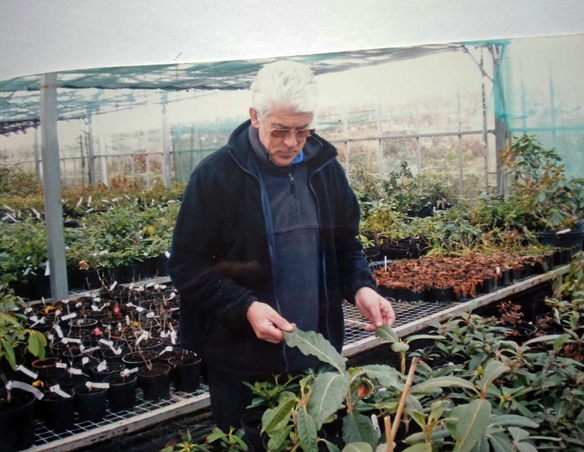
Photo: Jane Brazendale.